Morocco Road Rules for Foreign Drivers: What You Need to Know Before You Start
Berkars Team
By
Driving in Morocco as a Foreign Driver: The Essential Rules
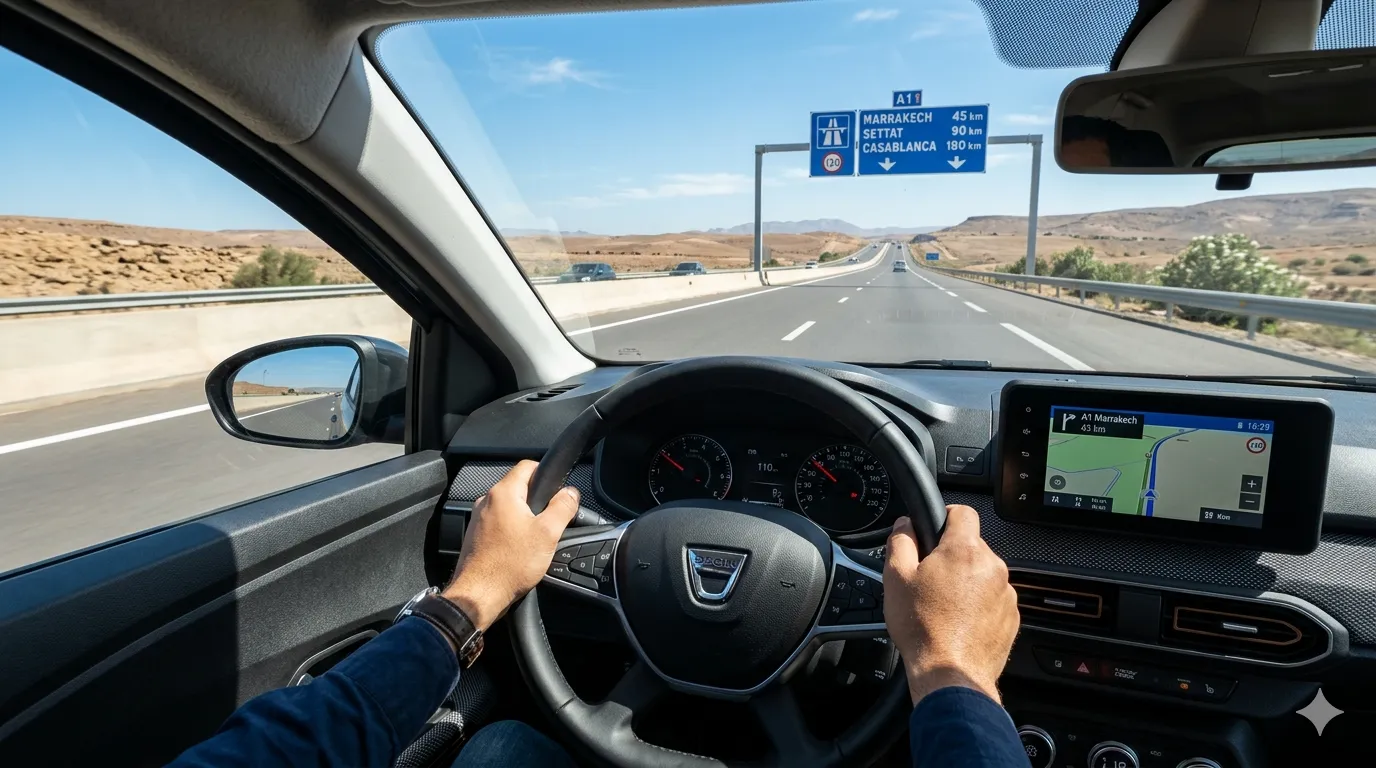
Morocco welcomes hundreds of thousands of foreign drivers each year who either hire a vehicle or enter with their own car. The vast majority encounter no problems — the regulations are broadly similar to European codes. But certain specifics are worth knowing before you start the engine.
---
Speed Limits
| Situation | Limit | |-----------|-------| | Motorway | 120 km/h | | National road outside urban areas | 100 km/h | | National road approaching a village | 60 km/h from the sign | | Within urban areas | 60 km/h | | Residential zone | 40 km/h |
Speed cameras are present and operational on motorways and national roads. Both fixed and mobile units exist. A speeding offence can be settled on the spot by fine, or result in a court appearance depending on severity.
---
Required Documents
Every driver in Morocco must carry:
- Valid driving licence (European, international, or national depending on bilateral agreements)
- Vehicle registration document (provided by the hire agency)
- Insurance certificate (provided by the hire agency)
- Passport or national identity document
In the event of a checkpoint — which proceeds courteously in the vast majority of cases — present documents calmly. Not having them can result in vehicle immobilisation.
---
Speed Bumps: The Most Common Surprise
Road humps (dos-d'âne) are numerous in Morocco and not always signed in accordance with European standards. You'll find them: - At the entrance and exit of every settlement, including small ones - In residential areas in cities - Sometimes on national roads approaching junctions
The practical rule: at every agglomération sign — even if it marks a hamlet of ten houses — lift your foot before entering. The speed bump is almost always there.
---
Alcohol at the Wheel
The legal limit in Morocco is 0.40g/litre (compared to 0.50g in France). Some regions have an effective zero-tolerance policy. In practice: drink-driving is taken very seriously by Moroccan police. Breathalyser checks exist. The advice is simple: do not drive if you have consumed alcohol.
---
Mobile Phone Use
Handheld phone use while driving is prohibited. Hands-free kits are permitted. Fines can be issued at checkpoints.
---
Seat Belts
Compulsory for the driver and all passengers, front and rear. Children must be secured in an appropriate seat for their size (infant seat, child seat, or booster depending on age and weight).
---
Police Checkpoints: What to Expect
Road police checkpoints are common on national roads, particularly at city approaches and major junctions. A standard checkpoint involves verifying the vehicle documents and the driver's identity.
What to do: - Stop completely as soon as the officer signals you - Switch off the engine if indicated - Present the required documents calmly - Do not negotiate the amount of a fine on the roadside — if you consider a sanction unjustified, note the details and address the matter through proper channels
What not to do: - Ignore an officer signalling you to stop - Attempt to negotiate a fine (this can make the situation worse) - Claim not to understand an instruction — traffic police in tourist areas frequently speak French and sometimes English
---
Rules Specific to Hire Vehicles
As the driver of a hire vehicle, you are personally responsible for complying with the highway code. In the event of a fine, your identity is recorded — the hire agency will forward any penalty notice received after your departure.
Berkars provides a summary of the key Moroccan traffic regulations at handover, in English and French. For any question during your rental period, our team is directly reachable.