Souss-Massa National Park from Agadir: Rare Birds and Empty Atlantic Beaches
Berkars Team
By
Souss-Massa National Park: The Nature Reserve Agadir Visitors Miss
The Souss-Massa National Park is one of Morocco's most ecologically significant protected areas — and one of the least known to visitors in Agadir. Located just 40 kilometres south of the city (35–45 minutes by car), it offers a dramatic contrast to the resort atmosphere of the Corniche.
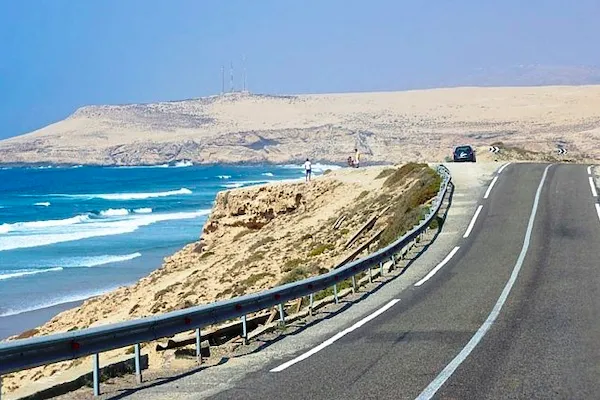
The northern bald ibis (Geronticus eremita), one of the world's most critically endangered bird species, nests here in one of its last wild colonies. The park also encompasses a remarkable coastal strip between the Souss and Massa river estuaries — pristine dunes, cliffs, empty beaches, and internationally important wetlands.
---
Getting There by Car
Route: Agadir → Inzgane → southern coastal road → Sidi Rbat (main park entrance)
Distance: approximately 40 km from central Agadir Time: 35 to 45 minutes
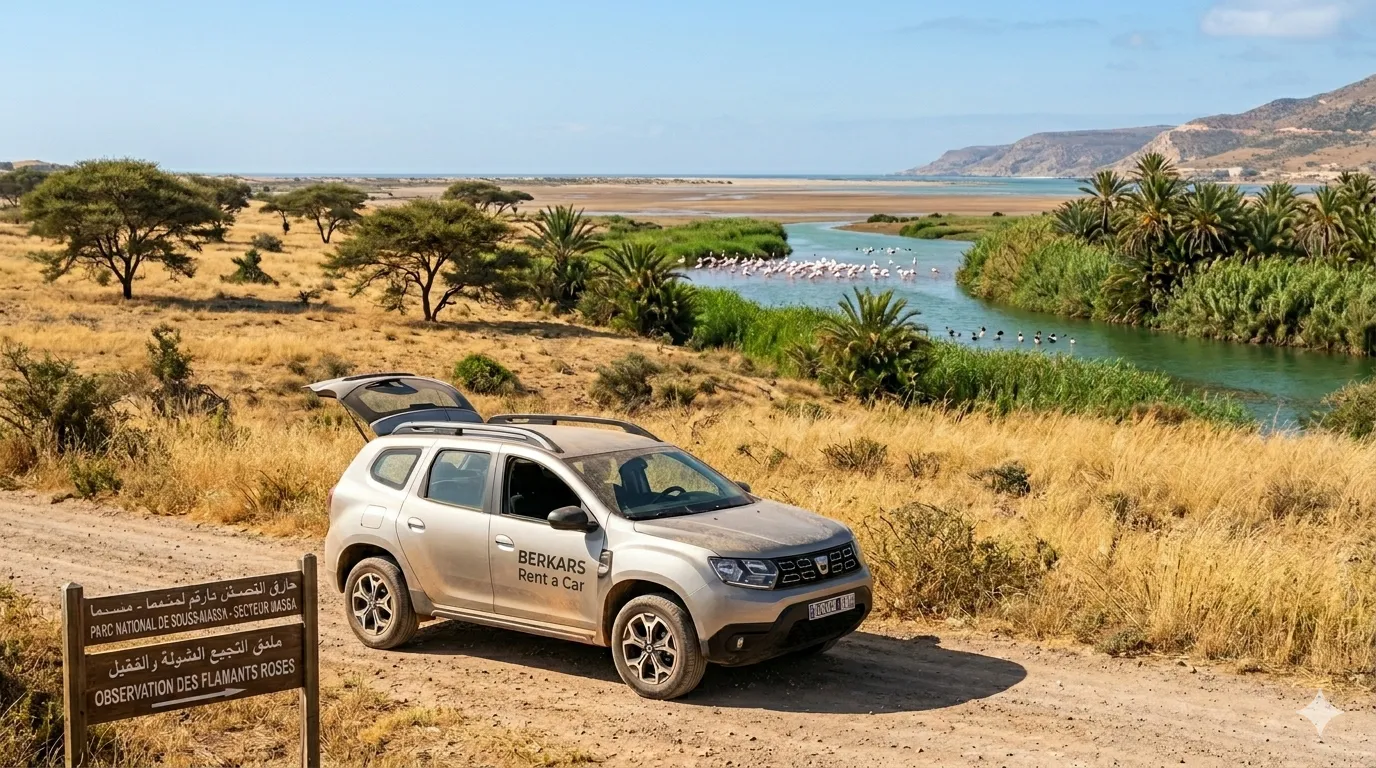
The road passes through Inzgane and follows the coast southward. The main park track from Sidi Rbat is accessible to standard hire cars (stabilised surface on the principal routes), though some side paths require higher clearance. An SUV is recommended if you want to explore the more remote areas; a standard saloon handles the majority of the park's accessible routes.
---
What You'll Find in the Park
The northern bald ibis: nearly extinct in the wild, Morocco holds one of its last naturally reproducing populations. The Souss-Massa colony is among the largest in the world. Best observation: early morning and late afternoon from March to June (nesting season).
Greater flamingos: the Massa estuary is a regular stopover site for thousands of flamingos during spring and autumn migrations.
Coastal wildlife: cormorants, ospreys, black kites, and a wide variety of waders on the estuary mudflats.
Argan trees: the park's inland sections contain argan specimens — sometimes centuries old — growing in natural conditions, free from agricultural management pressure.
---
The Park's Beaches: Controlled Access
Access to some coastal sections of the park is regulated to protect nesting activity. Some beaches are accessible with a park guide; others remain closed during breeding season. Check at the park entrance on the day of your visit for currently open zones.
Sidi Rbat village, at the southern park entrance, has accessible beaches nearby — fine sand, zero tourist development, clear Atlantic water.
---
Combining with Other Stops
Souss-Massa + Taroudant: enter the park from the south via the coast, exit east, and reach Taroudant via the Souss plain. A coherent full day.
Souss-Massa morning + Tifnit afternoon: from Sidi Rbat, a coastal track leads south to Tifnit, a small fishing village at the Oued Tifnit estuary. A late afternoon stop facing the Atlantic.
---
What to Bring
- Binoculars (essential for ibis and flamingo observation)
- Camera with telephoto if you're a serious birder
- Substantial water — no infrastructure in the park
- Comfortable walking shoes
- Sunscreen: the dune areas offer minimal shade
Best time for birdwatching: March to May for nesting species; September to November for migrants.
---
Souss-Massa is one of those destinations that transforms an Agadir stay into something more layered. A half-day is enough for an introductory visit. Those who take an interest in it tend to come back.